HEPA / ULPA Filters
HEPA/ULPA 高效过滤器 · EN 1822
Sub-categories: H10–H12 (EPA) · H13–H14 (HEPA) · U15–U17 (ULPA)
Category at a glance
| Attribute | Value |
|---|---|
| Efficiency framework | EN 1822 |
| Sub-categories | H10–H12 (EPA) · H13–H14 (HEPA) · U15–U17 (ULPA) |
| SKUs catalogued | 0 |
Positioning
HEPA and ULPA filters sit at the terminal end of the air chain in cleanrooms, operating rooms and critical manufacturing. They run on the back of a pre-filter chain, so the efficiency class must be matched to the cleanroom ISO target rather than selected for its own sake.
What it is
HEPA/ULPA filters remove ≥99.95% (H13) and up to 99.9995% (U15+) of particles at MPPS for cleanrooms and critical environments.
Technical depth
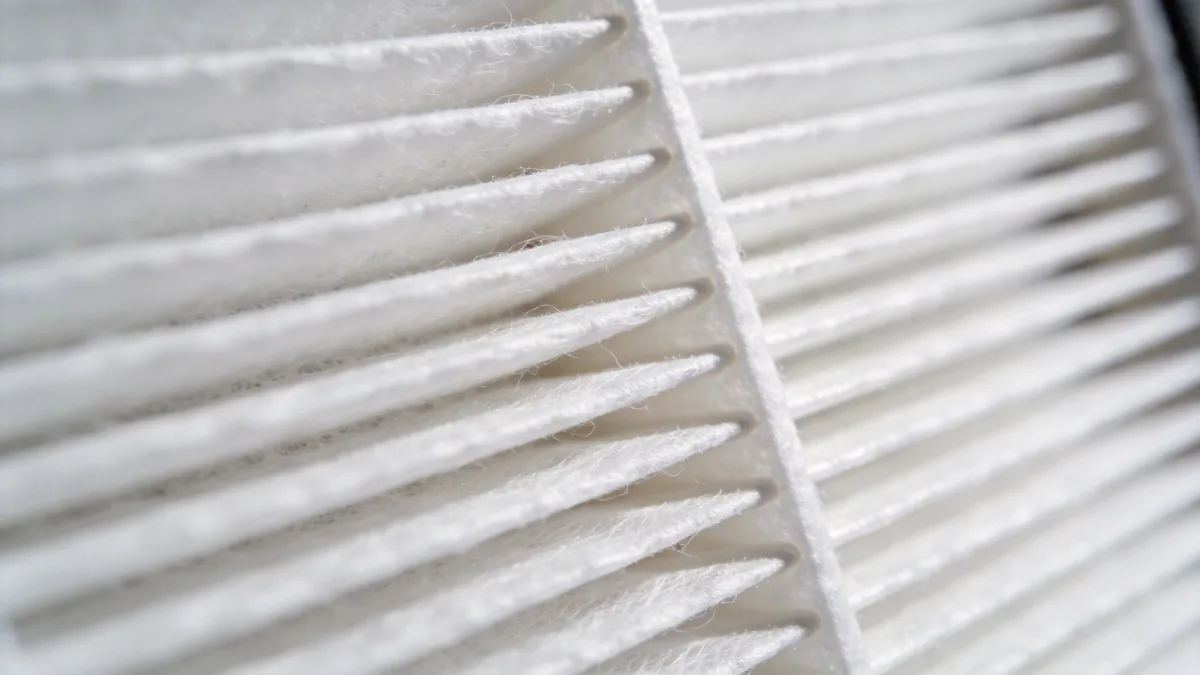
Efficiency is graded under EN 1822: H10–H12 cover the EPA range, H13–H14 are high-efficiency HEPA, and U15–U17 are ultra-low-penetration ULPA. Construction is either separator or mini-pleat. Sealing options include gel and endless-gasket types; frames are aluminium, galvanised steel or stainless. Typical panel sizes run 610×610×70 mm through 610×610×292 mm, and deep-pleat cassette and high-temperature variants extend the range. Mini-pleat production uses micro-glass media with pleat depths of 22–100 mm. The class label is only as good as the installed seal, so the seal type — gel for knife-edge housings, gasket for flanged — determines whether the rated efficiency is actually achieved, and a factory leakage-test certificate is the evidence that the class was measured rather than claimed. Deep-pleat cassette and high-temperature variants extend the family to removable terminal housings and elevated-temperature duty respectively.
Selection guidance
- Confirm the required efficiency class (H13/H14 vs U15) against the cleanroom ISO class target.
- Verify the seal type matches the housing (gel vs gasket).
- Confirm dimensions and whether a factory leakage-test certificate is required.
Procurement notes
- Lock the efficiency class (H13/H14 versus U15) to the cleanroom ISO 14644 target, not to a marketing claim.
- Verify the seal type against the housing — gel for knife-edge, gasket/endless-gasket for flanged.
- Confirm panel dimensions and state whether a factory leakage-test certificate is required with the order.
From a sourcing perspective
Our advice on HEPA/ULPA is that higher is not automatically better. A ULPA element costs more and reaches its rated life only behind a correctly graded pre-filter chain, so we recommend matching the class to the cleanroom ISO 14644 target and the process sensitivity rather than buying the highest number available. From a sourcing perspective, the seal type and the leakage-test certificate matter as much as the class — a gel seal on a knife-edge housing or a gasket on a flanged housing is what actually delivers the rated efficiency, so confirm the seal against the housing and state whether a factory leakage-test certificate is required with the order. The certificate is the evidence the class was measured, so request it rather than trusting the label.
Per-model dimensions, pressure drop, dust-holding capacity and other unpublished fields are
marked pending in the data subsite
rather than estimated.